How fast will Krea Bots transform agencies?
Krea put bots at nine agency desks, even the director's. Can bots take on real jobs, and who stays? I wrote the excitement and the fear as my own predictions.
Author: Alptekin Canatar
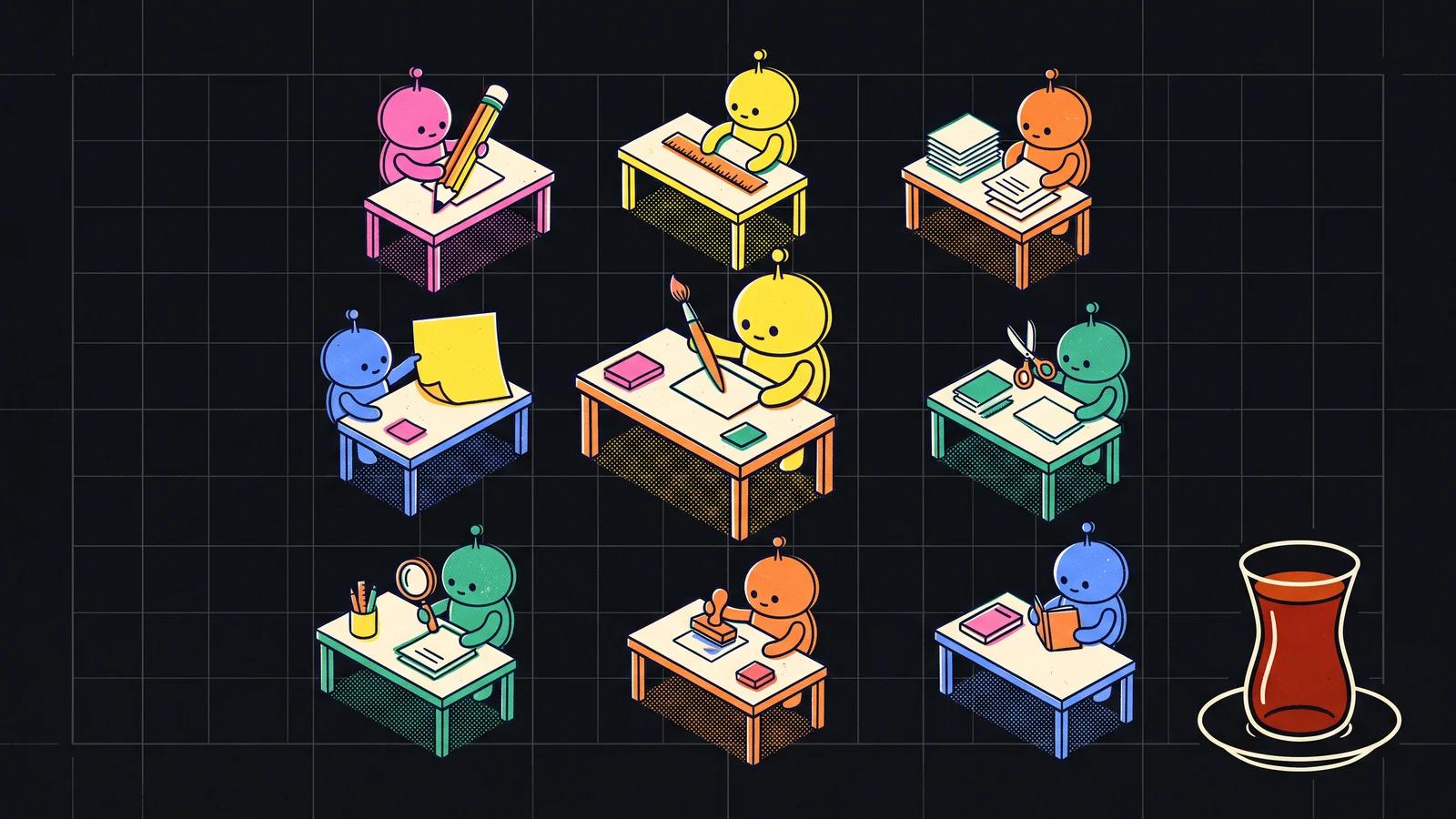
Will Krea Bots transform agencies? Krea has seated bots at nine desks of an agency. The director’s desk included. It excites me and it scares me a little, and I won’t hide either. The question is simple: can bots really take on jobs in an agency, and if they can, which employees stay? Everything below is my opinion, not Krea’s claim.
There is no tea-maker on the list. That seat is still ours. The announcement came on November 12 and beta applications are open. As an art director who works at an agency, I am curious about three things: what does it actually do, where does it stumble, whose desk empties and who keeps theirs?
Nine desks, all familiar
This is the lineup Krea lists for a motion project. The list comes from Krea’s own page. The page mentions around twenty named bots, but nine are enough to tell the story.
- North, creative director: reads the brief, plans the work, hands it out to the other bots.
- Lumen, image maker: visuals and product shots.
- Doodle, storyboard artist.
- Snip, video editor: vertical cuts, short spots.
- Glide, motion designer.
- Bloop, sound designer.
- Voxel, 3D artist.
- Ping, social media manager: captions, scheduling, crops for every channel.
- Serif, brand designer: brand consistency and logo checks.
This is the team every agency puts together when a project opens. The only difference is that they all sit in the same window, and nobody has to type “I sent a meeting invite, can you accept?”
The exciting part: brief on Monday, live by Friday
It works like a chat. You call a bot with @, it does its share and hands the next step to the bot that owns it. In Krea’s sample week, North proposes three directions and shortlists three of twenty images, with reasons. Snip cuts a 15-second spot, Ping pushes the work live on four channels. Brief on Monday, live on Friday.
Before starting, each bot looks at three things: the lessons it has learned in its own craft, the project’s notes and the workspace’s house rules. Krea’s sample rule is “logo bottom right.” You write the brief once, the bot remembers. A lesson the bot suggests does not become permanent until you approve it. So the final_final_FINAL_v7 folders get replaced by an intern with a memory. How accurately it remembers, Krea gives no measurement.
The page also has a line that says “43 h of bot work · 7 min of yours.” The bots work 43 hours, your share is 7 minutes. That does not mean “43 hours of human work fit into 7 minutes.” Krea states the bots’ working time, gives no human equivalent and has not published how it calculated the figure. When you add up the twelve lines on the page, you get 43 hours and 7 minutes, so the number is consistent with its own sample week. But that is not a measurement, it is a sentence from a product page.
Can they take on jobs? My answer is half and half
On the production desks, the seats that turn out pieces of work, they look like they can: cropping, resizing, a first visual, a sketch, an edit cut. I say “look like” because the only evidence I have is Krea’s own demo. There is no independent test.
On the responsibility desks I am not sure. I have three reasons.
The first is taste. Krea says the bots adapt to the team’s taste. According to Genativity, this is really a quality-evaluation system, and Krea has not published any measurement on it. In an agency, the measure of taste is rarely hiding in “okay.” It hides in “make it a notch more vibrant.” I won’t say “it works” until I see how that sentence gets written into memory.
The second is the exception. Krea’s house-rule example is the logo staying bottom right. What happens when there is no bottom right on the poster? An art director solves that in two seconds. I don’t know whether the bot would break the rule and make the piece ugly, or follow the rule and cut it loose from the brand. This question comes from ChatPicture’s article, and Krea does not answer it.
The third is accountability. Nine bots pass work to each other. If a mistake enters at step two and shows up at step seven, someone has to find out which bot made it. Krea’s answer is approval. For the Meta Ads connection, the page says “Builds campaigns and launches them when you approve.” The bots prepare, a human presses the button.
In short, a bot can sit at the desk. The person who faces the client and says “this is how this work should be” will still be someone.
The scary part: the front door is getting narrower
Look at the jobs the bots take first: cropping, resizing, a first visual, a sketch. To me, those are also a junior designer’s first jobs. In Krea’s demo, Ping crops every post for feed, story and store. Part of that “can we do a story version too?” message that lands at 5:58 pm on a Friday is this kind of work.
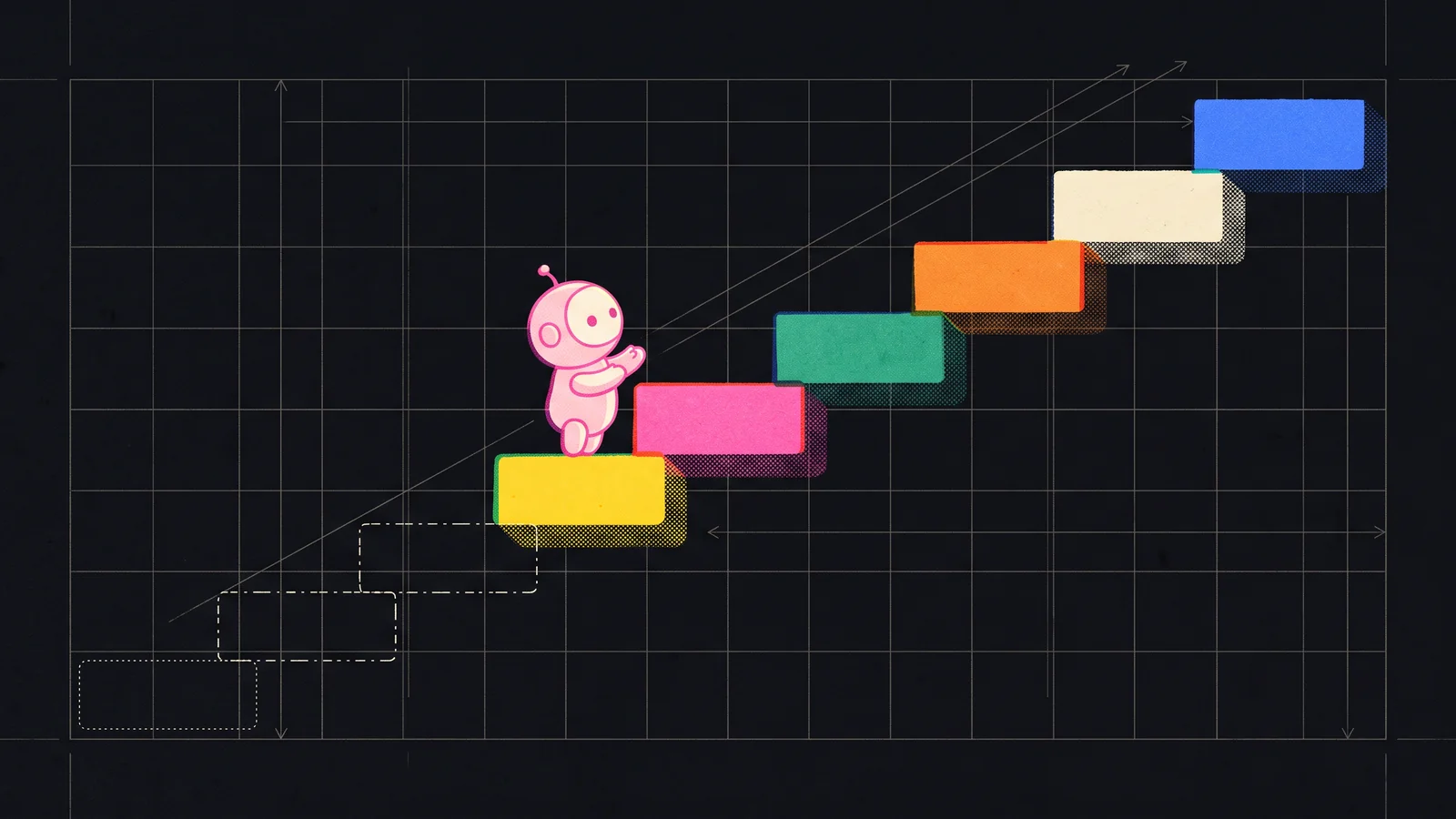
What will be left for the junior once those jobs go to the bot? I don’t know. That is my real fear. The senior art director who will supervise the bots is someone who grew up doing these jobs by hand. If the entry-level work disappears, where will tomorrow’s senior come from?
Who goes, who stays?
My answer is blunt. All of it is my prediction, not Krea’s claim or a measurement.
- Mid-level and junior graphic designers: bots could take over the entire design process, leaving only direction.
- Social media manager: in my view, the job goes entirely. Captions, scheduling and per-channel crops are already the recipe for Krea’s bot.
- A 6-7 person team doing presentations and coordination: shrinks to one person. With fewer people sending meeting invites, calendars get roomier, I’ll admit that.
- People with active roles in the field, like video shoots: stay.
- The senior art director who supervises the bots: stays. The one who presses the approval button and catches the mistake.
The tea-maker is not on Krea’s list either. They haven’t handed the question of who brews the tea over to a bot yet.
The agency changes shape: three predictions
The same development has two faces, one excitement and one fear. My three predictions carry both.
First, the agency pyramid narrows. The bottom floor moves to the bots, and the decision-makers are left. One person does the work of a team, with a bot crew beside them.
Second, the director’s job slides from producing to supervising. Reading the output of nine bots and catching the mistake at step two is a profession of its own. The path to that profession still goes through doing the work by hand once, and that is where it gets stuck.
Third, the exciting one: small teams will go after big jobs. For someone who can’t build a nine-person crew but wants to deliver nine-person work, this list looks attractive. Until price and quality are known, I’ll settle for “looks.”
Who gets the last word?
I applied for the Krea Bots beta and I’m waiting to hear back. Everything I have written so far comes from Krea’s own account and independent articles. I haven’t seen it with my own eyes.
Will Krea Bots transform agencies? I think yes, the bots will come into the agency. What is up for debate is which desks they will sit at and where the person who leaves the desk will go. The person who hears “let’s make the logo a bit bigger,” understands what it really means and says “yes, this brand would do that” will, I think, still be one of us.
What Krea hasn’t said yet
Krea gives accepted teams $1,000 in credits. The price and the general availability date are reported as not published. The integrations listed are Slack, Meta Ads, Figma, a browser and Krea’s own production infrastructure.
The Krea information in this post comes from Krea’s own announcement, its page and independent coverage. It is not an independent test.
Sources
- Krea announcement (X, November 12, 2026)
- Krea Bots page
- Genativity: Krea Bots beta news
- AlphaSignal: the nine-bot lineup and memory layers
- VP Land: Krea Bots news
- ChatPicture: Krea Bots beta analysis
- Grainzilla: Krea Bots beta news
Keep reading
- Making more time for design: on automation and the tools I build for myself
- PostForge: the Photoshop plugin I am developing myself